
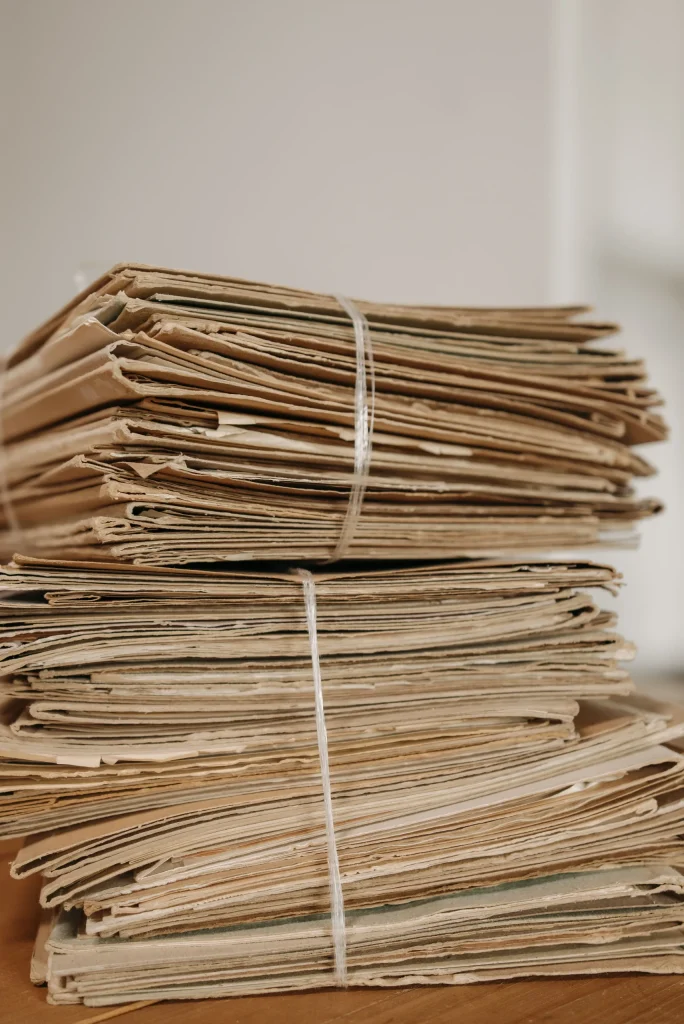
Retirement brings a new rhythm to life. There is more time at home. Fewer work commitments. A slower pace. For many, it is a welcome shift. But alongside this change often comes something unexpected: decades of accumulated paperwork. Filing cabinets filled with old statements. Drawers packed with manuals. Boxes of tax returns, warranties, receipts, insurance documents and handwritten notes. Paper has a quiet way of building up over the years.
After retirement, reducing paper clutter is not just about tidiness. It is about clarity, safety and peace of mind.
Why paper builds up over time
During working life, paperwork often feels necessary “just in case.” Tax records are kept longer than required. Bank statements are stored automatically. Superannuation documents, policies and investment reports arrive regularly.
Without a clear system, paper tends to stay where it lands, and over time it can create overfilled drawers and cabinets, making it hard to find documents you need. It can also bring up some anxiety when you have to decide what to keep and what you can get rid of. Lastly, a pile of papers can also create confusion for your family members if something unexpected happens.
So, when paperwork becomes overwhelming, even simple tasks like finding a Medicare card or property title can feel stressful.
What you actually need to keep
One of the biggest surprises for many retirees is how little paper truly needs to be stored long-term. Generally, it is wise to keep:
- Identification documents (birth certificate, passport, marriage certificate)
- Property deeds and mortgage discharge papers
- Current insurance policies
- Superannuation and pension documentation
- Wills, power of attorney and legal documents
- Recent tax returns (according to ATO guidelines)
- Active contracts or warranties
Old utility bills, expired policies, outdated bank statements and instruction manuals for appliances you no longer own can often be safely released. Reducing paper is not about being reckless. It is about being intentional.
Creating one clear system
Instead of multiple drawers and scattered piles, aim for one central, clearly labelled filing system. Categories might include: personal identification, home and property, financial, medical, legal, and insurance.
When everything has a defined home, it becomes easier for you and for your family to locate what matters. A simple, well-labelled file box is often more effective than an overflowing cabinet.
Considering digital options
For those comfortable with technology, scanning key documents can reduce physical storage even further. Banks, super funds and utility providers now offer digital statements as standard. Even choosing digital delivery for new documents can prevent further build-up.
However, if technology feels daunting, keeping paper organised in one contained space is still a significant step forward.
Reducing stress for your family
One of the most important reasons to simplify paperwork after retirement is the clarity it provides for loved ones. If an illness, emergency or transition into care occurs, your family may need quick access to important documents. When papers are organised, labelled and consolidated, it removes unnecessary pressure during an already emotional time.
Many adult children describe paperwork as one of the most difficult parts of managing a parent’s affairs, not because it is complex, but because it is scattered. Taking control now is a practical and generous act.
A lighter, calmer home
Paper clutter is easy to underestimate. It does not feel as visible as furniture or boxes, but it carries mental weight. Stacks on a desk can create quiet stress. Overfilled drawers can create frustration. Unsorted files can create uncertainty. Reducing paper after retirement allows your home to feel simpler and more supportive of this stage of life.
It is not about perfection. It is about creating a clear path forward. If you are unsure where to begin, start small. One drawer. One category. One hour at a time. With steady progress, decades of paper can become a manageable, organised collection of what truly matters and nothing more.